
Published June 20, 2026 · 5 min read · Health Insurance
Episode 02 · Fredrick Insurance Brokers Podcast
Do not pay the first bill. Get the EOB. Take notes. Negotiate when needed. You hold more power than you may realize.
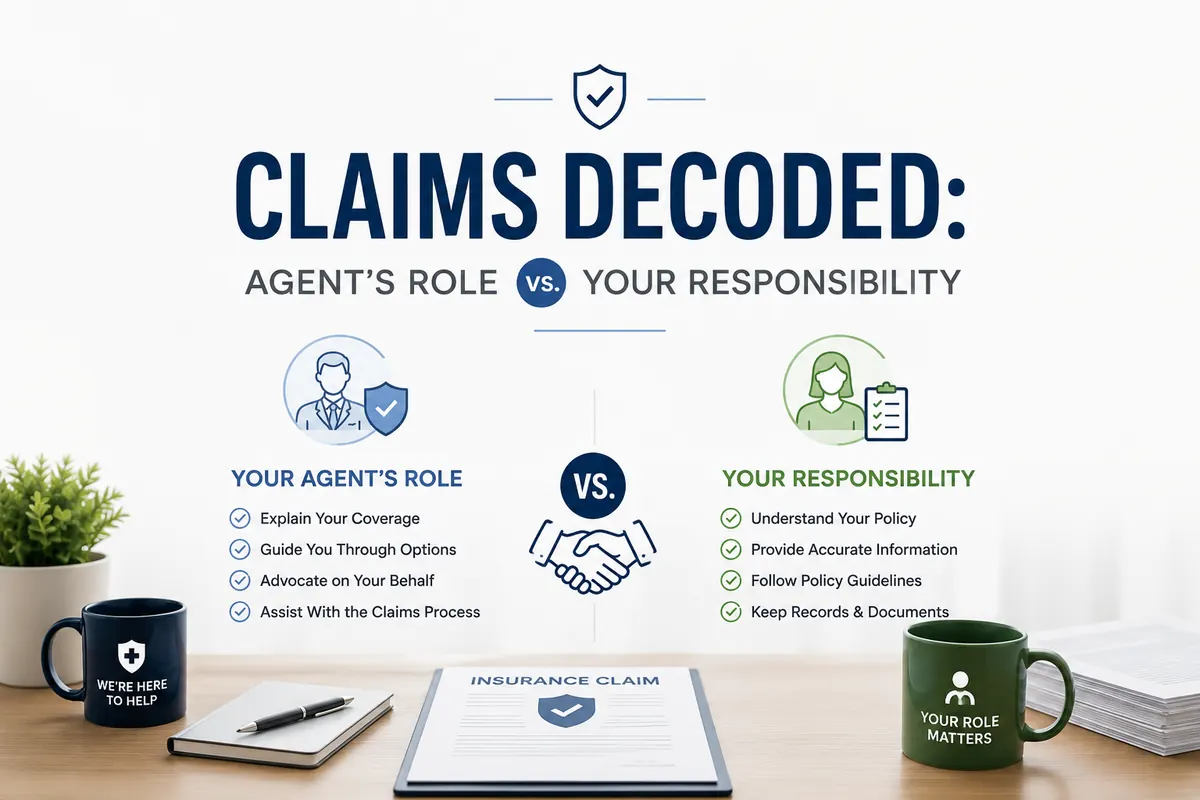
As a health insurance agent, I’ve watched far too many people learn the hard way that medical billing is a maze built on jargon, miscoding, and assumptions that you will simply pay whatever shows up in your mailbox. Much of the frustration comes from a misunderstanding of roles.
I can guide you, educate you, and step in when something needs to be escalated — but because of HIPAA, I cannot run your claim for you or fix it behind the scenes without your authorization. That means you, as the consumer, hold more power than you may realize.
Here’s the simple system I walk every client through. 👇
You Hold More Power Than You May Realize
Your broker can guide you, educate you, and escalate on your behalf — but HIPAA limits how directly we can act inside the claim process without your written authorization. That sounds restrictive at first, but it is actually empowering. Your job is to gather documents, ask questions, and keep records. My job is to help you understand what those documents mean and how to use them.
Most claim problems do not start with your insurer — they start in the provider’s office. Miscoding, missing preauthorization, incorrect phone numbers, or a claim that was never submitted at all. Recognizing this is the first step toward fixing it.
How to Read an EOB: Your Roadmap to Every Claim
The most important tool in this entire process is one many people overlook: the Explanation of Benefits (EOB). If you never receive an EOB, there is a strong chance the claim was never filed or stalled somewhere along the way.
When you do receive one, it tells a detailed story. Without an EOB, you are essentially guessing. With it, you have a roadmap to every charge on your bill.
What an EOB tells you:
Without the EOB, you are essentially guessing. With it, you have a roadmap.
The Paper Trail That Protects You From Medical Billing Errors
Document every interaction with both your provider and your insurance carrier. Write down dates, names, departments, and a brief summary of each conversation. This habit matters more than most people realize — it shifts the power dynamic when something goes wrong.
📝 What To Record
Date, time, the name and department of the person you spoke to, what was confirmed, and any reference number. “I spoke to Cindy on March 2 at 10:14 a.m., she confirmed CPT 93000 was submitted without preauthorization” is the kind of note that moves mountains.
🏥 Why It Matters
Most claim issues begin in the provider’s office — miscoding, missing preauth, incorrect carrier on file, claims never actually submitted. Providers should be able to show their documentation. If they cannot, your notes become leverage.
📞 When To Escalate
If a provider refuses to correct a coding error, a carrier won’t answer questions clearly, or a bill arrives with no matching EOB, that’s the moment to bring your broker in. With your detailed record, we can hold the right party accountable quickly.
CPT and ICD Coding Errors: Why You Should Always Check the Codes
Coding accuracy is not just a billing issue. A skin medication coded as a cardiac drug can make it appear as though you have heart disease — affecting underwriting, life insurance, and future authorizations. Reading your EOB and asking your provider to correct ICD and CPT codes when needed is essential.
Prices vary dramatically across facilities — outpatient centers often offer the same quality as hospitals at a fraction of the cost. Use a healthcare price transparency tool to compare. Here’s the sequence I walk every client through:
Do not pay the first bill
Verify the EOB matches it first. If the bill arrives before the EOB, something is incomplete — usually a claim that wasn’t submitted correctly.
Request an itemized bill and compare to the EOB
Line by line. Mismatched codes, duplicated charges, or services you didn’t receive are surprisingly common — and surprisingly easy to spot once you have both documents side by side.
Check the price against transparency tools
Use a price-transparency tool to see local, regional, and national ranges for the procedure. Many families cut a quoted price in half by asking for the corrected code or the cash price.
Be cautious of late bills (timely filing limits)
Most insurers have timely filing limits around 120 days. A bill that appears a year or two later is a red flag — ask for documentation, confirm with your insurer, and don’t accept vague explanations.
4 Questions To Ask Before You Pay Any Medical Bill
“Has the claim actually been submitted to my insurer?”
If you don’t have an EOB, the answer is likely no — or it stalled somewhere.
“Do the CPT and ICD codes on the EOB match what actually happened?”
One wrong code can shape underwriting and future authorizations for years.
“Was preauthorization required — and was it obtained?”
If the office didn’t get it, they often need to fix the denial, not you.
“How does this price compare to local, regional, and national ranges?”
Outpatient often costs a fraction of the same procedure at a hospital.
Education turns fear into a system. You are the customer, and everything in healthcare billing is negotiable when you bring clarity, records, and confidence to the table.
Three Truths From This Episode
If You Take Three Things Away
The EOB is your roadmap
No EOB? The claim may not have been filed. Start there, every time.
Notes are leverage
Dates, names, departments. The detail that feels excessive today is the detail that wins the dispute tomorrow.
Almost everything is negotiable
When you bring clarity, records, and confidence to the table.
A Bill Has You Confused?
Let’s Look at It Together
Have an EOB or a surprise bill that doesn’t add up? Bring it to a friendly, no-pressure conversation with a licensed Texas insurance broker. We’ll walk through it line by line — Texan to Texan.
Schedule a Free Consultation →
Educational content only. Fredrick Insurance Brokers is an independent licensed insurance agency. A licensed insurance professional can help you review your options. We do not guarantee approval, savings, benefits, claim outcomes, or coverage; specific situations vary by carrier, plan, and applicable terms.